今年1年を漢字で振り返ると?
喫茶ふでまめ
喫茶ふでまめ(珈琲と手しごとの店)

I run a tiny coffee shop called Fudemame Coffee in Demachiyanagi, Kyoto. We’re only open on Sundays — just during lunchtime. No reservations. No rush. Just slow-dripped coffee, hand-ground beans, and the quiet sound of pen on paper.
At Fudemame Coffee, we don’t just serve coffee. We serve time. Time to sit. Time to think. Time to write a letter by hand — even if it’s just to yourself.
That’s what “fudemame” means, by the way. In Japanese, a fudemame (筆まめ) is someone who writes letters often and with care. A meticulous letter-writer. It’s a compliment — a way of saying you value connection through the written word.
For years, our regulars have spent their Sunday afternoons at our counter, sipping single-origin pourover and filling pages in their journals. The ritual of coffee and writing became inseparable in our little shop. But not everyone can visit Kyoto every Sunday. So we asked ourselves: How do we bring this experience — this fudemame time — to people anywhere in the world?
The answer was the Fudemame Notebook (ふでまめ帳).
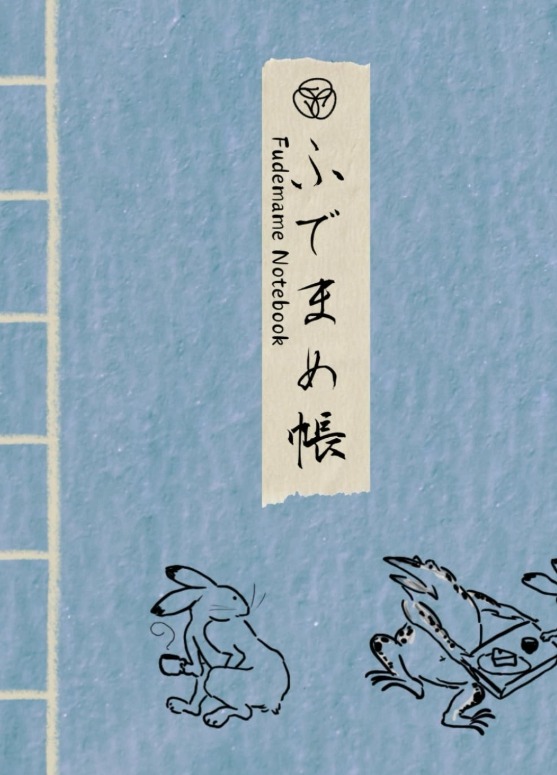
The Fudemame Notebook is our original A5-sized journal — 100 pages of quality paper, designed for writing, sketching, doodling, or whatever your pen feels like doing.
But what makes it truly special is the artwork.
Every page features illustrations inspired by Choju-giga (鳥獣戯画) — Japan’s oldest known manga, painted over 800 years ago. These whimsical scrolls depict frogs, rabbits, and monkeys acting like humans — bathing, wrestling, having ceremonies. They’re playful, irreverent, and surprisingly modern.
Our Fudemame Notebook uses Choju-giga-inspired illustrations with official permission from Kosanji Temple, the Kyoto temple that has preserved these national treasures for centuries. This isn’t just a notebook with cute animals on it. It’s a notebook that carries 800 years of Japanese art history in your bag.
| Feature | Details |
|---|---|
| Size | A5 (148 × 210 mm) |
| Pages | 100 pages |
| Artwork | Choju-giga inspired (officially licensed by Kosanji Temple) |
| Created by | Fudemame Coffee, Kyoto |
| Use | Journaling, note-taking, sketching, letter-writing |
| Available | Amazon (US, FR, UK, DE, and more) |
If you’ve ever been to Japan, you’ve probably seen Choju-giga characters without knowing their name. They appear on everything from temple goods to airline safety cards. But the original scrolls — housed at Kosanji Temple and the Tokyo National Museum — are among Japan’s most important cultural properties.
Choju-giga (literally “Animal Caricatures”) consists of four picture scrolls created between the 12th and 13th centuries. The most famous scroll — the first one — depicts frogs and rabbits in satirical human activities. Art historians consider it a precursor to modern manga.
What makes Choju-giga remarkable:
The Fudemame Notebook brings these characters into your daily life. A rabbit pouring tea on one page. A frog meditating on another. They’re companions for your writing — never intrusive, always charming.
To understand why this notebook exists, you need to understand Kyoto’s coffee culture.
Japan is one of the world’s most sophisticated coffee markets. But Kyoto takes it further. While Tokyo’s coffee scene races toward the cutting edge — light roasts, competition-grade baristas, Instagram-worthy latte art — Kyoto moves at a different pace.
Kyoto is home to some of Japan’s oldest kissaten (喫茶店) — traditional Japanese coffee houses that predate the modern café boom by decades. These aren’t Starbucks competitors. They’re institutions.
A kissaten is a place where:
Fudemame Coffee is part of this tradition — but with a twist. We don’t just invite you to drink coffee slowly. We invite you to write slowly. To spend your Sunday afternoon putting pen to paper with no agenda, no deadline, and no screen.
There’s a reason writers have always loved coffee shops. The combination of caffeine, ambient noise, and the absence of home distractions creates a mental space that’s uniquely productive — but not in a corporate, hustle-culture way.
At Fudemame Coffee, we see it every week. People arrive stressed. They order a pourover. They open their notebook. And somewhere between the first sip and the last page, something shifts. They’re not “being productive.” They’re being present.
This is what the Japanese concept of ikigai (生きがい) looks like in practice — finding meaning and joy in a small, deliberate daily ritual.
The Fudemame Notebook has no rules. It’s not a planner with pre-printed boxes. It’s not a bullet journal with dotted grids. It’s 100 blank pages with Choju-giga friends keeping you company.
Here’s how our customers around the world use theirs:
Write three things you’re grateful for while your coffee brews. By the time you finish writing, your cup is ready. It’s a two-minute ritual that sets the tone for your entire day.
If you’re exploring specialty coffee, use the notebook to record what you taste. Origin, roast level, brewing method, flavor notes. Over time, you’ll develop a personal flavor map that no app can replicate.
A5 fits perfectly in a daypack. The Choju-giga illustrations give each page a sense of place — even if you’re writing about Paris or Portland, there’s a little piece of Kyoto on every page.
This is the original “fudemame” use case. Write a letter to someone you haven’t talked to in a while. You don’t have to send it (though you should). The act of writing by hand to a specific person changes the way you think.
The paper quality handles both pen and pencil. Doodle alongside the Choju-giga characters. Add your own frogs. Make them do things. Nobody’s judging.
We live in a world of keyboards, touchscreens, and voice assistants. So why would anyone choose to write by hand?
Science has some answers:
The Fudemame Notebook isn’t anti-technology. It’s pro-balance. Use your laptop for work. Use your phone for communication. And use your notebook for the things that matter most to you — privately, slowly, and in your own handwriting.
Looking for a unique gift that isn’t mass-produced or generic? The Fudemame Notebook checks every box:
Whether it’s for a birthday, a holiday, or just because — the Fudemame Notebook is the kind of gift that makes someone say, “Where did you find this?”
Fudemame Coffee sits in Demachiyanagi — a quiet, riverside neighborhood in northern Kyoto, near the confluence of the Kamo and Takano rivers. It’s the kind of area where university students bike past temples, and old wooden machiya houses stand next to modern apartment blocks.
We open every Sunday, and only during lunchtime. Our menu is simple: hand-roasted, hand-ground, hand-dripped coffee. No espresso machine. No blender. Just a kettle, a dripper, and patience.
The name “Fudemame” reflects our philosophy. We believe that in a world of instant everything, there’s deep value in doing things slowly and with care — whether that’s roasting coffee beans or writing a letter.
Our online shop offers freshly roasted coffee beans shipped from Kyoto. And now, with the Fudemame Notebook, you can bring a piece of our Sunday ritual into your own home — wherever you are in the world.
The Fudemame Notebook is available on Amazon in multiple countries:
Available on:
Search for “Fudemame Notebook” or “ふでまめ帳” on your local Amazon store.

The notebook uses quality paper suitable for everyday writing instruments — ballpoint pens, gel pens, pencils, and fine-tip markers all work well.
Yes. The Fudemame Notebook features Choju-giga-inspired illustrations created with official permission from Kosanji Temple in Kyoto, which preserves the original scrolls.
The pages are unlined, so you can create any layout you like — bullet journal grids, daily planners, free-form journaling, or sketching.
Absolutely. The notebook itself requires no Japanese language ability. The Choju-giga illustrations are universally charming, and the writing pages are blank — ready for any language.
Most Japanese notebooks (like Hobonichi or Midori) are excellent but focus on planning and organization. The Fudemame Notebook is intentionally unstructured — it’s about the joy of writing, not the productivity of planning. Plus, the Choju-giga art and the connection to a real Kyoto kissaten make it culturally unique.
Yes — through Amazon’s international marketplace. Shipping availability and times vary by country.
You don’t need a plane ticket to experience Kyoto’s slow coffee culture. You just need a good cup of coffee, a quiet moment, and a notebook worth opening.
The Fudemame Notebook was born in a tiny Sunday kissaten, inspired by 800-year-old frogs, and made for anyone who believes that the best things in life happen slowly — one sip and one sentence at a time.
Written by Kohei Takeda, owner and roaster at Fudemame Coffee, Demachiyanagi, Kyoto. Open every Sunday — come write with us.