
ご注文用紙を眺めると、営業を2度楽しめる
喫茶ふでまめ
喫茶ふでまめ(珈琲と手しごとの店)
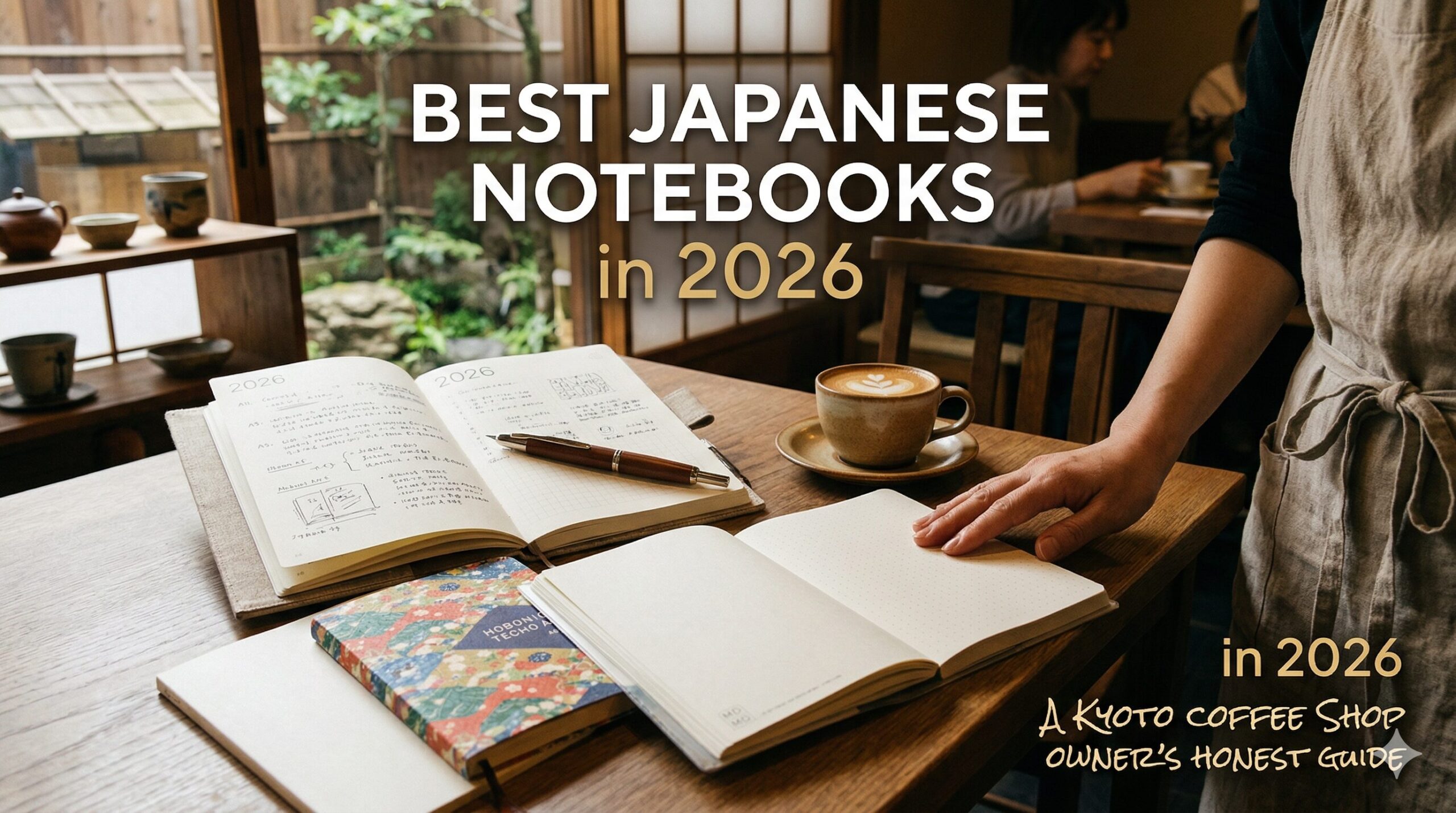
I’ll be honest. When I opened my coffee shop in Kyoto, I didn’t expect to become a notebook person.
I’m Kohei Takeda, and I run Fudemame Coffee — a tiny, Sunday-only kissaten in Demachiyanagi, Kyoto. Every week, I watch customers walk in, order a pourover, and pull out a notebook. Not a phone. Not a laptop. A notebook.
And almost every time, it’s a Japanese notebook.
There’s a reason for that. Japanese notebooks aren’t just “notebooks from Japan.” They represent an entirely different philosophy of what a notebook should be. The paper is smoother. The binding is flatter. The design is quieter. Everything is intentional — nothing is decorative for decoration’s sake.
Over the years, I’ve tried dozens of Japanese notebooks — behind my counter, on my roasting bench, during trips to source beans. Some became daily companions. Others collected dust. This guide covers the ones that actually survived real life.
Before I get into specific brands, let me explain what you’re actually paying for when you buy a Japanese notebook. Because the difference isn’t just “better paper” — it’s a completely different approach to stationery.
Japanese paper technology is generations ahead. Here’s what that means in practice:
Japanese notebook makers obsess over binding. Thread-sewn (or “stitch-bound”) notebooks open completely flat, so you never have to fight the spine while writing near the center of the page. This sounds like a minor detail until you’ve spent 20 minutes writing in a cheap notebook that keeps snapping shut.
Most Japanese notebooks follow the principle of kanso (簡素) — simplicity. Covers are often plain or minimal. There are no motivational quotes, no faux-leather textures, no gilded edges. The notebook doesn’t try to be anything other than a tool for your thoughts.
That said, some Japanese notebooks break this rule beautifully — and the Fudemame Notebook, which I created, is one of them. More on that later.
I’ve organized these by use case, not by price or brand loyalty. Because the right notebook depends on what you’re actually doing with it.
Price: $3–$8 | Size: B5, A5, A4 | Pages: 30–80
If Japan had a national notebook, this would be it. Kokuyo Campus notebooks are in every school bag, every office desk, and every convenience store in the country. The paper is smooth, the binding is reliable, and the price-to-quality ratio is almost unfair.
Why I use it: I keep a stack behind the counter for quick notes — supplier phone numbers, roasting temperatures, random ideas. They’re disposable enough that I don’t feel precious about them, but good enough that writing in them is actually pleasant.
Best for: Students, daily note-takers, anyone who goes through notebooks fast.
Drawback: The covers are purely functional. If you want something beautiful on your desk, look elsewhere.
Price: $12–$22 | Size: A5, A4, B6 Slim | Pages: 176
Midori’s MD paper has been refined since the 1960s. It’s thick enough to handle fountain pen ink without bleeding, but thin enough to keep the notebook slim. The cream-colored pages have a warmth to them that pure white paper lacks.
Why I use it: This is my personal journal. I’ve filled five of them over the past three years. The thread-stitched binding means they open dead flat, and the paper takes my Pilot Custom 74’s ink beautifully.
Best for: Journaling, long-form writing, fountain pen users.
Drawback: The minimal cover gets scuffed easily. You’ll probably want a cover for it (Midori sells simple paper ones, or you can go for leather).
Price: $15–$25 | Size: A5, B5 | Pages: 100
Life Co. has been making stationery since 1946, and the Noble Notebook is their flagship. The paper is thick, bleed-resistant, and has a slight texture that gives your writing character. The vintage-inspired cover design is quietly elegant.
Why I use it: I use this specifically for coffee tasting notes. The paper handles my Sailor Pro Gear’s wet nib without flinching, and the 100-page count is perfect for a few months of daily tastings.
Best for: Fountain pen enthusiasts, anyone who wants a writing experience with a bit of old-world charm.
Drawback: Slightly heavier than other notebooks of the same size due to the paper thickness.
Price: $6–$12 | Size: A5, A6, B5 | Pages: 96
Apica has been making notebooks since 1916, and their C.D. (Correct, Durable) line is a hidden gem. The paper is thin yet somehow resists bleed-through — a minor miracle of Japanese paper engineering. The retro-style covers come in multiple colors and look great lined up on a shelf.
Why I use it: I recommend these to customers who are curious about Japanese notebooks but don’t want to commit $20+ right away. They punch way above their price point.
Best for: Beginners, budget-conscious buyers, anyone who wants Japanese paper quality without the premium price.
Drawback: The binding isn’t as flat-opening as Midori or Life.
Price: $45–$60 (cover) + $5–$8 (refills) | Size: Regular, Passport | Pages: 64 per refill
This isn’t just a notebook — it’s a system. A leather cover that ages beautifully over years, holding multiple thin notebook refills that you swap in and out based on your needs. Blank, lined, grid, diary, sketch — there’s a refill for everything.
Why I use it: I take the passport size when I travel to coffee farms and trade shows. The leather cover has picked up coffee stains, bag scratches, and rain spots that tell their own story. After three years, it looks better than it did new.
Best for: Travelers, creative types, people who want one notebook system for life.
Drawback: The initial investment is high. And the refills run out faster than you’d expect (64 pages goes quickly).
Price: $18–$30 | Size: A5, B5, A6 | Pages: 368 (365) / 160 (Editor’s)
Stalogy notebooks are deceptively simple. The 365 has one page per day for an entire year — thin enough that the whole thing is still manageable. The Editor’s Series has numbered pages and ultra-thin grid lines that disappear under your writing.
Why I use it: The Editor’s Series lives in my bag for coffee shop ideas — new menu items, bean sourcing plans, marketing notes. The numbered pages make it easy to reference back.
Best for: Planners, project managers, people who like structure without rigidity.
Drawback: The 365’s pages are very thin. Heavy fountain pen inks will ghost through.
Price: $10–$20 | Size: A5, A4, B5 | Pages: 70–80
Maruman’s professional-grade line. The paper is thick and smooth, with excellent bleed resistance. The notebooks have a sleek black cover that looks at home in both a design studio and a boardroom.
Why I use it: When I’m designing new coffee packaging or sketching shop layout ideas, this is what I reach for. The A4 size gives enough room to think visually, and the paper handles markers and colored pencils well.
Best for: Designers, architects, anyone who mixes writing and drawing.
Drawback: The spiral binding isn’t for everyone, and the notebooks are heavier due to thick paper.
Price: $2–$5 | Size: A5, A6, B5 | Pages: 30–80
MUJI doesn’t try to be fancy, and that’s the point. Recycled paper, simple kraft-colored covers, no branding beyond a tiny label. These are the Toyota Corollas of notebooks — reliable, affordable, everywhere.
Why I use it: I keep a few A6 MUJI notebooks scattered around — one in my apron, one by the bed, one in my car. For quick captures and throwaway notes, nothing beats the combination of low price and decent quality.
Best for: Minimalists, environmentally conscious buyers, MUJI fans.
Drawback: Paper quality is good but not great. Fountain pens will bleed through.
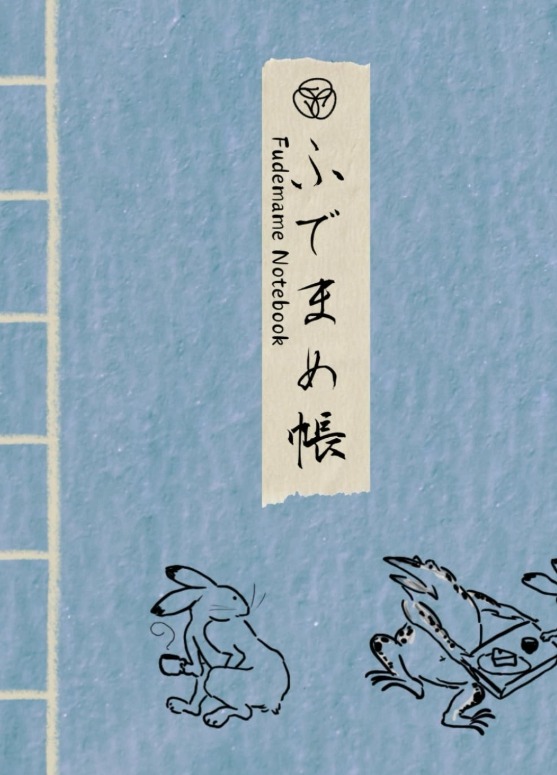
Price: Affordable | Size: A5 | Pages: 100
Okay, this is my notebook. I’m biased. But let me tell you why I made it, because it fills a gap that no other Japanese notebook covers.
Every notebook on this list is excellent at being a notebook. Great paper, smart binding, clean design. But none of them tell a story. None of them connect you to something bigger than the act of writing.
The Fudemame Notebook features illustrations inspired by Choju-giga (鳥獣戯画) — Japan’s oldest manga, painted over 800 years ago at Kosanji Temple in Kyoto. Frogs playing, rabbits wrestling, monkeys making mischief. Our illustrations are officially licensed by Kosanji Temple, the same temple that has preserved the original scrolls for centuries.
I created this notebook because my coffee shop regulars kept asking for something they could take home — something that captured the fudemame experience of sitting in a Kyoto kissaten, drinking hand-dripped coffee, and writing without a deadline.
Why this is different: Most “Japanese art” notebooks you find on Amazon slap ukiyo-e prints on a generic cover. The Fudemame Notebook was designed by a Kyoto coffee shop owner, illustrated with permission from a national-treasure temple, and made for people who understand that writing by hand is an act of slowing down.
Best for: Japan culture enthusiasts, coffee lovers, journaling fans, gift-givers looking for something authentic and unique.
Where to buy: Available on Amazon — search “Fudemame Notebook” or use ASIN B0DPX331HD.
Price: $5–$10 | Size: A5, B5 | Pages: 80
Tsubame (meaning “swallow” in Japanese) has been manufacturing notebooks since the 1940s. Their foolscap paper is legendarily smooth, and the classic cover design — featuring an image of the tsubame bird — is iconic in Japanese stationery culture.
Why I use it: I give these as small gifts to coffee shop regulars. They’re affordable enough to be generous, but the quality surprises people who expect something cheap.
Best for: Stationery collectors, gift-givers, anyone who appreciates heritage brands.
Drawback: Can be harder to find outside Japan. Amazon availability varies.
| Notebook | Price | Size | Pages | Best For | Fountain Pen Friendly |
|---|---|---|---|---|---|
| Kokuyo Campus | $3–$8 | B5/A5 | 30–80 | Everyday notes | Fair |
| Midori MD | $12–$22 | A5/B6 | 176 | Journaling | Excellent |
| Life Noble | $15–$25 | A5/B5 | 100 | Fountain pens | Excellent |
| Apica C.D. | $6–$12 | A5/A6 | 96 | Budget pick | Very Good |
| Traveler’s Notebook | $45–$60+ | Reg/Pass | 64/refill | Travel | Very Good |
| Stalogy Editor’s | $18–$30 | A5/B5 | 160 | Planning | Good |
| Maruman Mnemosyne | $10–$20 | A5/A4 | 70–80 | Creative work | Very Good |
| MUJI Recycled | $2–$5 | A5/A6 | 30–80 | Quick notes | Fair |
| Fudemame Notebook | Affordable | A5 | 100 | Culture + Coffee | Good |
| Tsubame Note | $5–$10 | A5/B5 | 80 | Heritage fans | Very Good |
If the table above feels overwhelming, answer these four questions:
If you’re reading this from the US or Canada, you’re part of a growing trend. In January 2025, The Japan Times reported that American “stationery nerds” are driving a boom in Japanese notebook sales. The pandemic accelerated this — when screens became overwhelming, millions of people rediscovered the simple pleasure of writing by hand.
The numbers back it up:
What’s driving this? Three things:
Yes — if you write regularly. The difference in paper quality alone makes writing more enjoyable and your notes more legible over time. Even budget options like Kokuyo Campus and Apica C.D. outperform most Western notebooks at similar prices.
A5 is the most versatile — large enough for comfortable writing, small enough for a bag. B5 is better if you prefer more space (closer to US letter size). A6 is pocket-sized for quick notes.
Most of them, yes. Midori MD, Life Noble, and Apica C.D. are specifically excellent for fountain pens. Cheaper options like MUJI and basic Kokuyo Campus may ghost or bleed with wetter inks.
The Fudemame Notebook is designed specifically as a giftable item — it has a cultural story (Choju-giga art, Kyoto coffee shop origin) that makes it meaningful, not just functional. Tsubame Note is another great affordable gift option.
Japanese notebooks generally have smoother paper, better bleed resistance, and flatter bindings. Moleskines are marketed on brand cachet; Japanese notebooks earn their reputation on paper quality and craftsmanship.
On Amazon. Search for “Fudemame Notebook” or go directly to the product page using ASIN B0DPX331HD. Available in the US, Canada, UK, France, Germany, and more.
I’ve spent years surrounded by notebooks. Behind my coffee counter, I’ve watched hundreds of people write in them. And the best notebook is never the most expensive one, the most beautiful one, or the one with the fanciest paper.
It’s the one you reach for on a Sunday morning with a cup of coffee. The one that’s worn and coffee-stained and full of your handwriting.
If that happens to be a $3 Kokuyo Campus, great. If it’s a Midori MD, wonderful. And if it’s a Fudemame Notebook with 800-year-old frog illustrations — well, I’d be honored.
Whatever you choose, just open it. The paper is waiting.
Written by Kohei Takeda, coffee roaster and owner of Fudemame Coffee in Demachiyanagi, Kyoto. Open every Sunday — bring your notebook.


